Custom Wood Toy Manufacturer | OEM & ODM Wooden Toys
Partner with an experienced custom wood toy manufacturer. 15+ years of OEM/ODM services for wooden walkers, doll houses, balance bikes. Get a quote today.
Finding the Right Custom Wood Toy Manufacturer: A Strategic Guide for B2B Buyers
Partnering with the right custom wood toy manufacturer can determine the success or failure of your product line. Whether you are launching a private label wooden toys brand, expanding your wholesale catalog, sourcing unique designs for retail stores, or developing bespoke wooden toys for educational institutions, the manufacturer you choose influences not only product quality but also your time-to-market, cost structure, and long-term supply chain stability.
This guide walks through what B2B buyers need to evaluate when selecting a custom wooden toys partner, how OEM and ODM models differ, and what practical steps streamline the journey from concept to finished product.
Why Custom Wood Toys Remain a Strong Category
The wooden toy market continues to demonstrate resilience and growth across global markets. Parents and educators consistently favor natural materials, durability, and safety—attributes that wood inherently provides. Unlike plastic alternatives that dominate mass-market segments, wooden toys carry a premium perception that supports healthier margins for retailers and distributors.
For brands seeking market differentiation, custom wooden toys offer opportunities unavailable through generic catalog sourcing. Unique shapes, proprietary color schemes, branded packaging, and specialized functionality all contribute to building a distinct product identity. A wooden doll house with your brand's design language and educational focus creates competitive barriers that simple product sourcing cannot match.
Industry data indicates steady demand growth for premium wooden toys, particularly in North American and European markets where safety regulations and environmental consciousness drive purchasing decisions. The tactile appeal and perceived quality of wooden products resonates with consumers increasingly skeptical of disposable plastic alternatives.
Our experience spanning over 15 years in wooden toy manufacturing confirms that B2B buyers who invest time in proper supplier selection consistently outperform those who prioritize speed over strategy.
Understanding OEM vs. ODM: Which Model Serves Your Goals
OEM (Original Equipment Manufacturing)
OEM arrangements work optimally when you possess completed designs, detailed specifications, and established quality standards ready for production. The manufacturer produces according to your exact requirements—your tooling, your color formulations, your packaging designs, your quality benchmarks.
This model suits established brands with existing intellectual property or those working with internal design teams capable of producing production-ready technical packages. When you control the design, you maintain maximum creative authority over final product characteristics.
However, OEM arrangements also place greater responsibility on your shoulders. Engineering errors, safety standard oversights, and manufacturing feasibility issues discovered during production become your responsibility to resolve.
ODM (Original Design Manufacturing)
ODM partnerships become valuable when you need product development support beyond pure manufacturing. Manufacturers with genuine ODM capabilities transform concept sketches into production-ready designs, handle prototyping iterations, and suggest material optimizations based on real-world manufacturing experience.
The ODM model proves particularly valuable for buyers entering the wooden toy category for the first time. Experienced manufacturers anticipate common pitfalls—edge radius requirements for child safety, weight distribution considerations for stability, hardware selection for durability—and address these proactively during development.
Cubebby's ODM services frequently guide buyers who possess clear product visions but lack detailed engineering documentation. We provide structural recommendations, suggest safety standard compliance strategies, and help refine designs for manufacturability without sacrificing intended functionality or aesthetic goals.
Making the Selection
Most serious buyers benefit from a hybrid approach: leveraging manufacturer expertise during development while maintaining final approval authority over specifications. This balances developmental efficiency with brand control.
Critical Evaluation Criteria for Custom Wood Toy Manufacturers
Production Capacity and Lead Time Transparency
Ask potential partners directly about maximum monthly capacity and typical lead times. A manufacturer unable to meet your volume requirements or consistently deliver on promised timelines creates cascading problems throughout your supply chain.
Understanding capacity requires more than stated numbers. Ask about current order book status, facility expansion capabilities, and how peak season demand is handled. Manufacturers comfortable sharing realistic production scheduling information demonstrate operational maturity.
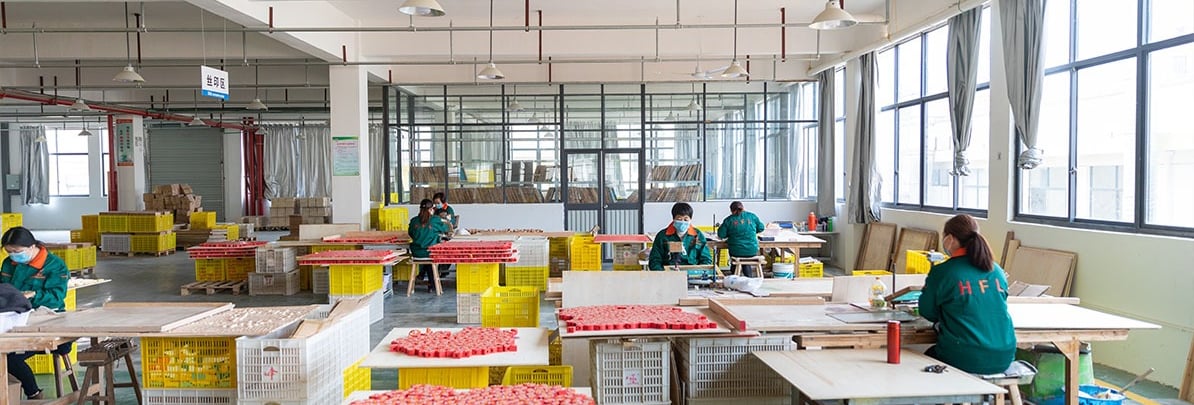
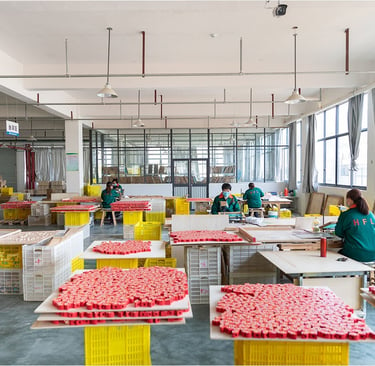
Cubeby maintains production facilities capable of handling orders from small initial runs through high-volume ongoing commitments. We provide honest lead time estimates during quotation, accounting for component sourcing, production scheduling, quality control processes, and shipping logistics. Artificial urgency tactics or suspiciously low quotes typically signal capacity or quality problems.
Quality Assurance Infrastructure
Request specific documentation of testing protocols and applicable certifications. Reputable manufacturers test for physical mechanical properties, flammability, chemical composition, and colorfastness. For European markets, EN71 compliance represents the minimum standard. For North American markets, ASTM F963 provides the regulatory framework.
Beyond compliance testing, examine their in-line inspection procedures. How many quality checkpoints exist during production? What percentage of finished goods undergo full inspection versus statistical sampling protocols? Who bears responsibility for quality issues discovered after shipment?
Professional manufacturers welcome these questions. Quality transparency demonstrates confidence in their processes.
Communication Responsiveness
B2B relationships succeed or fail based on communication quality. Evaluate response times during initial inquiries—are questions answered within 24 hours? Is technical information provided proactively, or must you repeatedly chase details?
Consistent communication becomes critical once production begins. Monthly updates with production progress, photographs of sampling stages, and prompt notification of any deviations from plan distinguish professional manufacturers from problematic suppliers.
Ask about dedicated account management. Working with sales representatives who then relay information through internal channels creates unnecessary delays and error potential. Direct communication lines streamline problem resolution.
The Journey from Design Concept to Production
Phase 1: Initial Consultation and Feasibility Assessment
Share your concept through sketches, reference photographs, detailed descriptions, or existing samples. Professional manufacturers evaluate feasibility based on material availability, tooling requirements, safety standard applicability, production complexity, and cost-effectiveness.
The custom toy design process typically begins with concept validation about target retail price points, intended market and applicable regulations, anticipated order quantities, branding requirements, and competitive positioning. This information shapes realistic quotation development and prevents costly misunderstandings later.
Be prepared to share your quality expectations. If you require furniture-grade joinery rather than staples and glue, or premium finishes rather than basic lacquers, communicate these requirements upfront. Hidden expectations create the most damaging quality disputes.
Phase 2: Design Development and Prototyping
For OEM arrangements with complete designs, this phase focuses on tooling creation, material qualification, and initial samples. For ODM partnerships, expect collaborative design refinement sessions working from concept sketches toward production drawings.
Prototyping costs vary based on complexity. Simple wooden toys might require $500-2000 in prototype tooling, while intricate designs with multiple components, custom hardware, and specialized mechanisms escalate accordingly. Always clarify prototype cost treatment—whether fees apply toward production orders or constitute separate expenses.
Prototype timelines typically run 3-6 weeks depending on complexity and current workload. Rush options may be available with premium pricing.
Phase 3: Sample Approval and Pre-Production
Production samples verify that finished products match approved specifications. Maintain rigorous sample evaluation protocols. Check dimensions against drawings with calibrated instruments, test assembly and functionality repeatedly, verify color accuracy against physical standards under appropriate lighting, and assess packaging presentation for retail appeal.
Never approve production based on prototype photographs alone. Physical sample review prevents costly production errors. When evaluating samples, consider realistic usage patterns—how will this product perform after repeated assembly and disassembly, exposure to varying humidity, or interaction by children?
Cubeby provides multiple sample iterations included in standard development packages. Buyers who request additional pre-production samples before final approval demonstrate the diligence that prevents quality disappointments.
Phase 4: Production and Quality Control
Professional manufacturers implement tiered inspection protocols: component inspection upon arrival, in-process inspection during assembly, and final inspection before packing. Request detailed inspection reports and retain pre-shipment photographs for your records.
Cubebby's standard process includes three quality checkpoints: first article inspection before full production run begins, mid-production inspection at 50% completion, and final inspection with detailed photographs prior to shipping. We welcome client representatives or third-party inspection services at any production stage.
Phase 5: Shipping and Documentation
Clarify documentation requirements early in discussions. Commercial invoices, packing lists, and certificates of origin form the standard documentation package. For wooden products entering certain markets, phytosanitary certificates may apply. Ensure your manufacturer has experience preparing documentation for your target import country.
Shipping options deserve careful evaluation. Sea freight offers cost advantages for volume orders but requires longer lead times. Air freight accelerates delivery at premium cost. Mixed arrangements—shipping components for local assembly—sometimes optimize the cost-speed equation.
Navigating Minimum Order Quantities and Cost Structure
MOQ expectations vary significantly across manufacturers and product types. Established wooden toy categories like wooden kitchen sets, doll houses, or toy boxes often accommodate lower MOQs due to tooling amortization across many clients. Custom designs requiring new tooling generally necessitate higher commitments to justify setup costs.
Be direct about your anticipated order volumes during initial conversations. Experienced manufacturers structure pricing tiers that reward larger commitments while remaining accessible for initial orders. Initial orders of 200-500 units per SKU often work for established product categories, while highly customized items may require minimum commitments of 500-1000 units.
Beyond unit pricing, evaluate total landed cost. Include shipping costs (which fluctuate significantly), import duties and tariffs, inspection fees, currency exchange considerations, and potential storage or distribution expenses. A manufacturer offering marginally higher unit pricing but superior logistics networks or quality consistency often delivers better overall value.
Request pricing breakdowns showing tooling amortization, material costs, labor allocation, and margin structure. Transparency in pricing discussions signals partnership orientation rather than transactional thinking.
Red Flags Worth Addressing Early
Certain warning signs deserve attention during supplier evaluation. Excessive promises regarding timelines, pricing, or capabilities typically indicate either inexperience or deliberate misrepresentation.
Request actual facility photographs—not stock images—and when possible, conduct virtual or in-person audits. Visible organization, proper equipment maintenance, professional staff interactions, and adequate workspace provide meaningful signals about operational quality.
Pay attention to payment term requests. Established manufacturers typically require 30-50% deposits with balance payment before shipping or upon bill of lading presentation. Requests for full payment upfront, unusual payment methods, or payments to personal accounts warrant additional scrutiny.
Communication patterns during negotiation often predict relationship dynamics after orders begin. If a manufacturer becomes unresponsive or defensive during reasonable due diligence, anticipate similar challenges when actual problems arise.
Wendy Said:
Selecting a custom wood toy manufacturer demands more than comparing quotation spreadsheets or selecting the lowest price option. The ideal partner understands your market positioning, supports your product development process with genuine expertise, maintains consistent quality standards, and communicates proactively throughout the relationship.
Cubeby Children Product Co., Ltd has spent over 15 years refining our approach to serving B2B clients—from initial concept consultation through reliable production execution. Our product range spans wooden baby walkers, balance bikes, rocking horses, wooden kitchens, doll houses, climbing frames, toy boxes, and learning towers, with full OEM and ODM capabilities across all categories.
Whether you represent a startup brand launching your first product line, an established importer seeking reliable production alternatives, or a retailer developing exclusive offerings, we welcome substantive conversations about your requirements.
Contact
Questions? Reach out anytime for wholesale details.
Phone
wendy_feng@cubebytoy.cn
+86 15850514251
© 2012-2026. Cubeby Children Product Co.,Ltd All rights reserved.